





Contents
Share


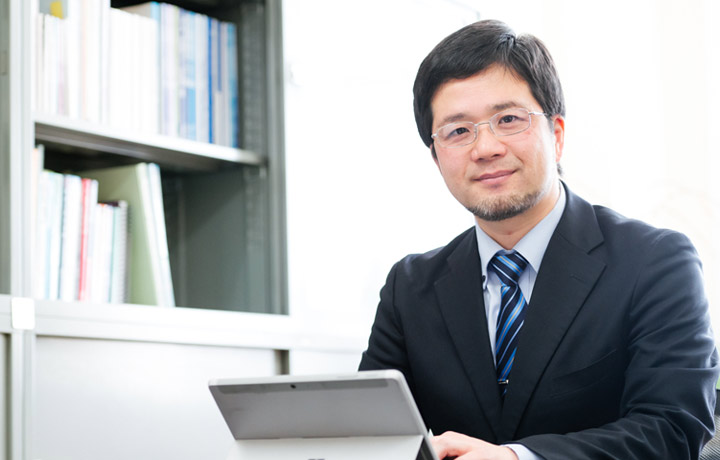
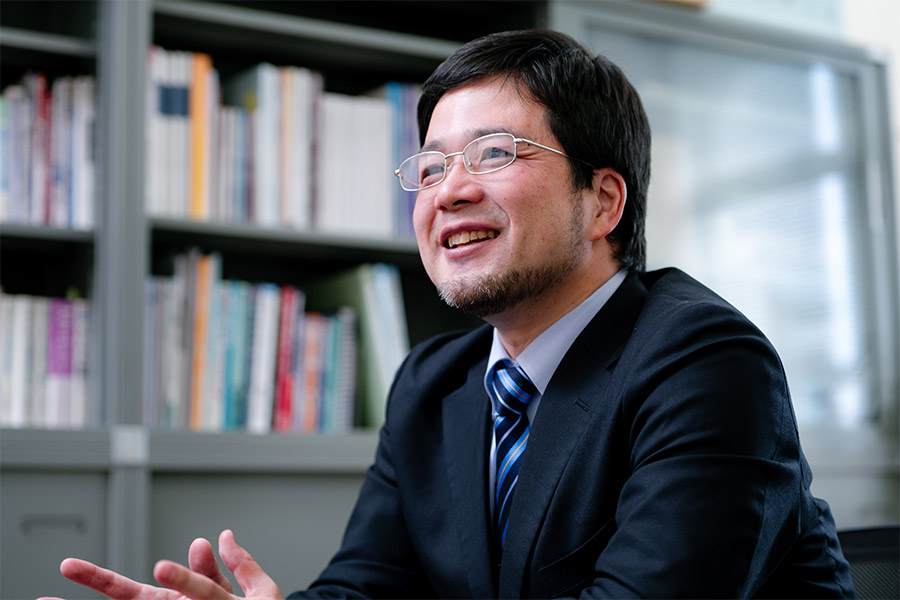
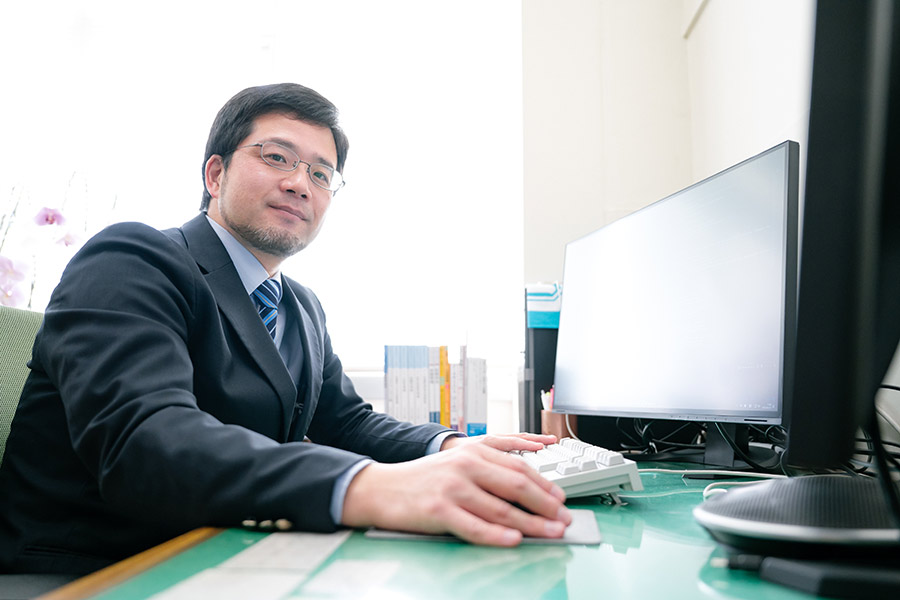
“I work with data, but what truly motivates me is knowing that it will ultimately be of use to someone. I’m not particularly good at taking on a leadership role, so I prefer to work alongside others, ” says Professor Shinichiroh Yokota from the Graduate School of Nursing. With a background as a nurse in clinical practice, Professor Yokota now applies informatics methods to nursing and medical data—using tools such as machine learning on electronic medical records (EMRs) to predict patient falls and the risk of bedsores. We spoke with him about how AI is transforming the world of nursing.
A geek-filled workplace and the beginning of my EMR analysis
You started your career as a nurse after university. Can you tell us how that led to your work in data analysis?
Yes, I worked as a nurse at the University of Tokyo Hospital for several years. After about four years in clinical practice, the hospital needed a dedicated nurse to help implement EMR. I ended up taking on cross-disciplinary work, including developing information systems.
Later, I was transferred to the Planning, Information and Management Department—but it was full of geeks* (laughs). There was someone with an engineering degree who was an expert in network infrastructure, and a doctor who spent all his time writing programs. And there I was. My first impression? “I had entered a truly crazy place.”
*Geek: A term used to describe someone with a deep passion and expertise in a particular field. Nowadays, such curiosity and specialization is often admired.
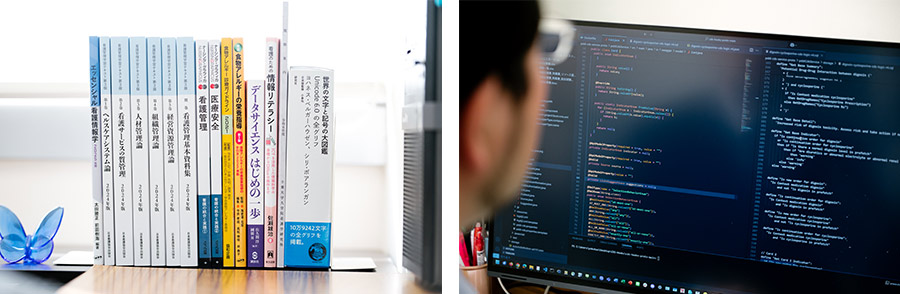
Up until then, I had written a few small programs, but I wasn’t particularly skilled at them. When I was transferred, I thought, “Now that I’m here, I should do something.” As I began learning databases and Java*, I decided to create a program capable of processing and outputting large amounts of data— something truly useful in clinical practice.
*Java: A versatile programming language that allows programs to run the same way across different platforms, from servers and PCs to home appliances. Its key feature is object-oriented programming, which organizes real-world objects and behaviors into reusable parts.
That was when I started thinking about predicting the risk of patient falls. I had initially been assigned to the neurosurgery department, where cerebral hemorrhages and brain tumors can cause paralysis and weaken muscles, making patients more susceptible to falls. When older adults fall, they can break bones and sometimes require additional surgery. I personally experienced having to rush a patient for a head CT in the middle of the night after a fall, which made me wonder if it would be possible to predict fall risk in advance.
To explore this, I analyzed data from approximately 11,000 patients stored in the University of Tokyo Hospital’s EMR. Using a statistical method called logistic regression, I built a fall risk prediction model. I also created a simple tool in JavaScript* and integrated it into the EMR system, so that fall risk could be displayed by clicking a few check boxes. This model was used at the hospital for about four years, until the system was updated and the tool became incompatible with the new platform.
*JavaScript: A programming language commonly used to create interactive features on web browsers, such as clicks and automatic screen updates.
I then built a model to predict the occurrence of bedsores, also known as pressure ulcers, which can cause pain, infection, and negatively impact a patient’s hospital experience. Prevention and early intervention are essential. Using data from data from roughly 75,000 patients, I developed and validated a predictive model to identify the risk of bedsores during hospitalization.

Your research has direct applications in clinical practice. How do you approach bridging the gap between data analysis and patient care?
From a nurse’s perspective, patient safety is always a top priority. The goal of the medical team, including nurses, is to ensure that patients complete their hospital stay without any complications. I have been working to support this goal from the perspective of information systems, both in my professional work and in my research.
Given my personality, I like to experiment with various models, adjusting them little by little, to find the system that works best. My motivation comes from a simple desire: to help someone in need with whatever I can.
Sharing and integrating EMR data
What kind of research are you currently working on?
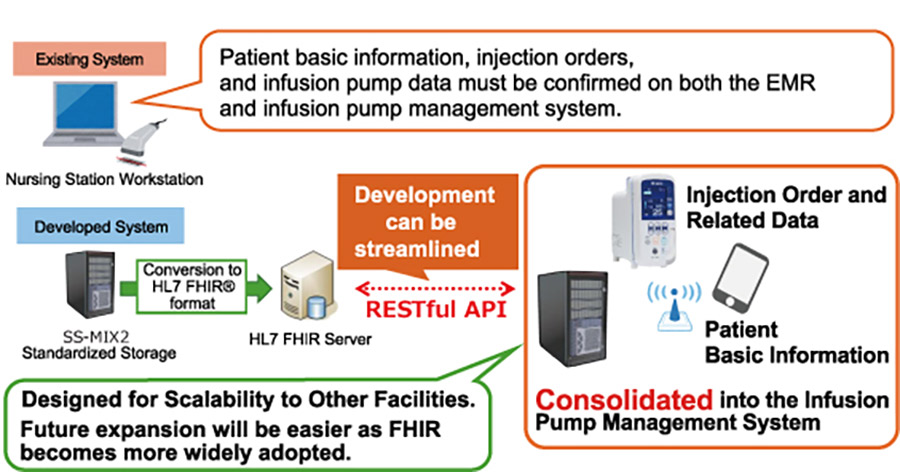
I am conducting research to develop an integrated system that links infusion pump data with EMRs using the international standard, HL7 FHIR*. Since EMR standards differ by manufacturer, information management often becomes fragmented. To address this, I have collaborated with device manufacturers to create a system that centrally integrates and manages these data. This research has already led to publications and patent applications. My current focus is on how to implement this system in real clinical settings and contribute to better patient care.
*HL7 FHIR: An international standard developed by Health Level Seven International to enable the interoperable exchange of healthcare information. FHIR, which stands for Fast Healthcare Interoperability Resources, is designed based on modern web technologies to make medical data exchange easier, more secure, and more compatible across systems.
One of my current research themes is the development and evaluation of an allergen glossary. The Ministry of Health, Labour and Welfare is promoting an information-sharing service for EMRs, and a model project has been launched to enable data sharing between medical institutions and patients. However, there is still no standardized terminology for recording allergy information, which has become a major barrier to such data exchange. As a nurse, I am taking part in a research team supported by the Ministry and contributing to the creation of standardized rules.
Since assuming my post at Chiba University in October 2024, I have also been working with academic societies to conduct research using open data and various datasets submitted to the government. I am currently preparing the results for publication. By comprehensively analyzing not only health insurance data, such as medical claims and DPC data*, but also facility-level exhaustive datasets**, I aim to identify insights that will contribute to improving nursing systems.
*DPC data: Data collected through the DPC-based payment system, which determines per-diem hospitalization fees based on diagnosis and treatment.
**Facility-level exhaustive datasets: Datasets that include all eligible cases within each facility
An era where nurses need knowledge and experience in informatics
What impact do you think the use of AI in nursing will have on nurses?
Processing capabilities will soon be integrated into the systems nurses use on a daily basis. This will inevitably create a gap between nurses who can effectively use these functions and those who cannot.
To address this, I believe two things are necessary. First, we need to increase the number of nurses who can use advanced functions and continue to improve those functions. Second, we need more nurses who can voice their needs regarding systems such as EMRs, and more who can contribute to system development. Achieving this requires cultivating professionals who understand both nursing and information technology. Starting in the second semester of 2025, I plan to offer lectures for master’s students in the graduate school. These lectures will include assignments such as database operations and programming, with the goal of fostering nurses who are confident in working with information systems.
Is nursing knowledge necessary for AI development?
The necessity of nursing knowledge depends on the type of AI being developed. However, in clinical settings, AI often lacks local content, such as real-time patient conditions and individual backgrounds. Nurses make decisions on a case-by-case basis, assessing what each patient needs and determining the appropriate interventions. While AI can offer potential options, I believe the ultimate decision should rest with the nurse. This reliance on professional judgement will likely continue for the foreseeable future. Therefore, nursing knowledge and clinical experience are crucial both for developing and effectively using AI in healthcare.
What benefits can patients enjoy from AI?
AI can facilitate two-way conversation, allowing healthcare providers to take more time to explain medical information to patients or share visiting s with family members. If a robot could convey patients’ questions to nurses, particularly in coordination with EMRs, it could enhance the quality and efficiency of nursing care.
Running side by side in study and research
Please give us a message for students and early-stage researchers
What I learned from my professor, who was both my doctoral advisor and my manager at my former job, was to “just try anything.” Even if you are unsure whether something will work, I believe it is important to give it a shot. System development and programming are prime examples of this: if something doesn’t work, you can always fix it.
When I supervise students, rather than leading them from the front, I try to motivate them, give them a gentle push, or run alongside them. In this sense, my message to students and early-stage researchers is: “find someone to run with you.” In both study and research, it is essential to run together with someone, rather than alone.

● ● Off Topic ● ●
How do you spend your weekends?
I’m a long sleeper, so I usually either sleep in or spend time with my family. I previously served as the president of the PTA at my children’s kindergarten and elementary school, and I’m still involved in local community activities as a member of the youth affairs committee of my local government. Since starting my current position, I have less time to participate, but I got involved in these activities mainly to spend time with my children rather than for community contribution. Recently, though, as my children have grown up, I spend less time with them.
Did your parents have a big influence on your interest in community activities? Are there any words or ideas they shared that left a strong impression on you?
It’s not that my parents were particularly active in community activities, but there’s one thing my mother said that I still remember. When I repeated my second year at university, she told me, “What you run away from will come back to haunt you.” There are times when it’s necessary to step back or take a temporary break, but her words have stayed with me long after I entered the workforce.
Recommend
-
Creating a Pandemic-Resilient Society to Tackle Future Invisible Enemies
2022.10.25
-
Examining Social Injustice of Modern Society through “Child Poverty”: Creating a Society Where Every Parent is Respected, and Every Child Thrives
2023.05.26
-
Affecting behavioral changes through a combination of mind and body: How can we calmly cope with stress in the event of a disaster?
2023.02.27

